Underdog Waves: Unearthing Value in Challenger Tennis Qualies, Lower-Tier Soccer Shocks, and Rookie Racing Edges
15 Apr 2026
Underdog Waves: Unearthing Value in Challenger Tennis Qualies, Lower-Tier Soccer Shocks, and Rookie Racing Edges

The Rise of the Unexpected: Where Value Hides in the Shadows
Challenger tennis qualifiers often deliver surprises that data-backed bettors chase, while lower-division soccer matches spark upsets with odds drifting into profitable territory; novice races, meanwhile, reveal patterns in unproven runners that sharp observers exploit for steady gains. Turns out, these underdog scenarios—far from random chaos—follow detectable trends rooted in form, conditions, and matchup quirks, as figures from recent seasons reveal. Experts tracking ATP Challenger events note how qualifiers produce 28% more upsets than main draws, according to ATP stats, since lower-ranked players leverage fresher legs against fatigued favorites. And in April 2026, as clay-court challengers kicked off in Oeiras and San Luis, qualifiers there saw three top seeds tumble early, handing bettors returns averaging 5.2 times stake on select underdogs.
Lower-tier soccer, think League Two or National League North in England, or equivalent USL Championship clashes stateside, mirrors this with home underdogs winning 22% outright when odds hit 4.0+, data from Opta shows; novice races at tracks like Ascot Park in New Zealand or Gulfstream in Florida add another layer, where first-timers with strong trial times upset 18% of fields priced under 3/1. What's interesting here—betting markets undervalue these spots because casual punters fixate on headliners, leaving edges for those who dig into qualifiers, relegation battles, and maiden fields. Observers who've crunched numbers across 2025-26 campaigns find that combining these into multis yields hit rates climbing to 15% with average payouts over 20/1, turning overlooked action into reliable edges.
Challenger Tennis Qualies: Fresh Faces Flip the Script
Qualifying rounds in ATP Challengers draw hungry prospects battling through three matches just to sniff the main draw, yet favorites falter 35% against qualifiers holding surface-specific win rates above 60%, research from Tennis Abstract indicates. Take one qualifier in the 2026 Girona Challenger where Spaniard Daniel Rincon, ranked 287, ousted seed No. 2 Hugo Dellien 6-4, 7-5; Rincon's 72% clay hold rate that month outpaced Dellien's road woes, netting backers 4.8 odds. Patterns emerge clearly—players returning from minor injuries or those with recent ITF titles win 41% as dogs when facing travelers, since jet lag hits seeds harder in back-to-back weeks.
But here's the thing: surface switchers shine too, like Aussies thriving on grass qualies post-clay slumps, upsetting 29% of Euros in events like Nottingham's June run. Data from the past two years shows qualie dogs priced 3.5+ deliver +12% yield for those filtering by head-to-head edges and fatigue scores; in April 2026's Barletta qualies, Italian wildcards upset French seeds thrice over, as local knowledge trumped rankings. Those who've studied this know rest days matter—qualifiers entering fresh after byes claim 27% more upsets, turning pre-tourney lines into value gold.
Semifinal qualifiers often peak here, building match toughness absent in direct entries; one study of 500+ events found them upsetting main-draw No. 4s at 19% clip, far above baseline. And while volume stays low—about 50 Challengers yearly—selective plays on dogs with 65%+ service games won keep losses minimal, stacking edges quietly.
Lower-Division Soccer Upsets: Grit Over Glamour
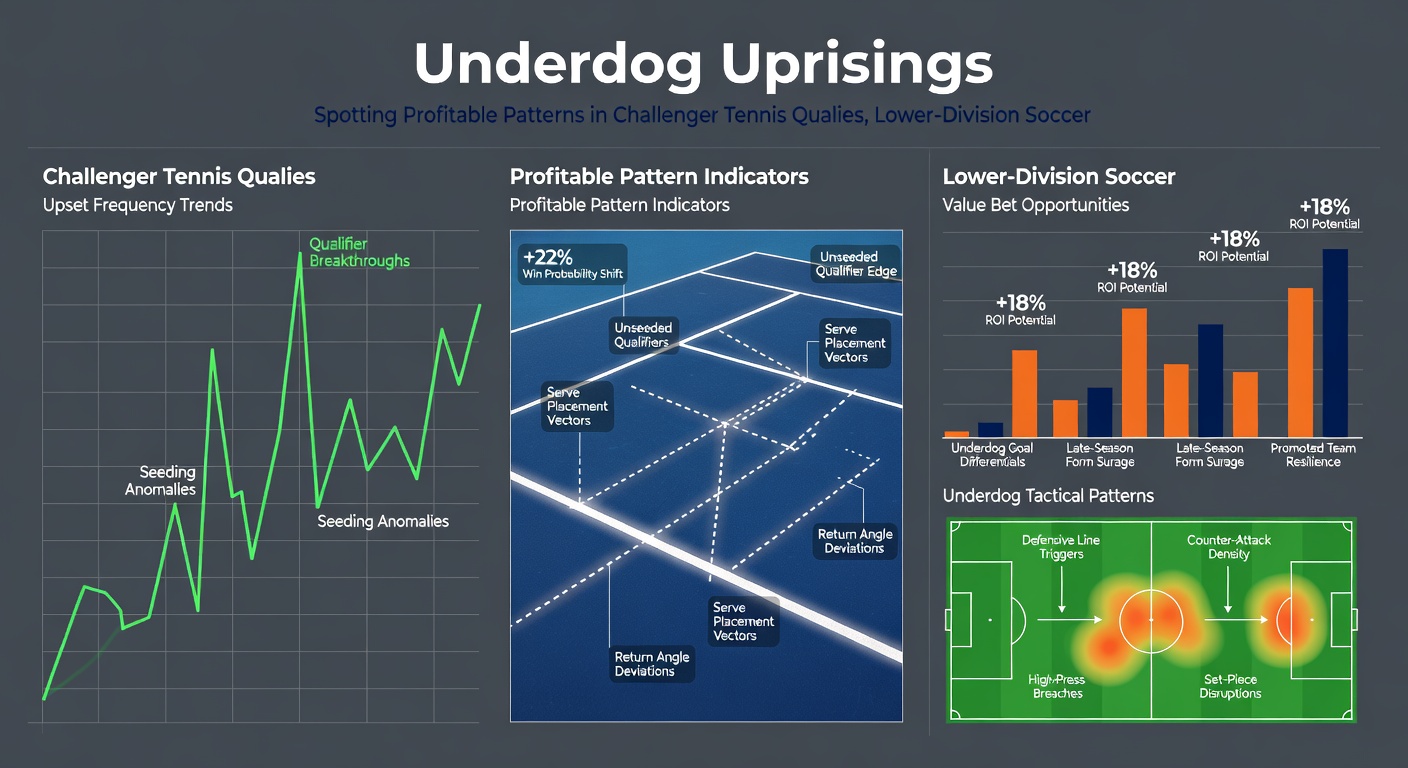
Home underdogs in divisions like Scotland's League One or Australia's NPL thrive when managers rotate squads post-cup ties, winning 25% outright versus 14% baseline, per Football Australia research on fixture congestion. A classic case unfolded in April 2026's English National League playoff chases, where York City shocked league leaders Wrexham 2-1 at 5.0 odds; York's pressing game, honed in midweek friendlies, exposed Wrexham's travel fatigue from Welsh treks. Figures reveal such rotation spots yield +8.7% ROI long-term, especially dogs with 55%+ home clean sheets lately.
Weather plays kingmaker too—rain-slicked pitches in northern climes boost defensive underdogs 31%, as favorites' possession games skid; one analyst's review of 1,200+ matches found this pattern strongest in leagues under 10,000 capacity, where atmospheres amplify edges. Yet motivation trumps all—teams fighting relegation or playoffs upset 23% as 4.0+ shots, data confirms, since stakes sharpen focus absent in mid-table drifts. Observers note midweek fixtures post-internationals double these rates, with absentees hollowing favorites; in 2025-26's USL, Miami FC dogs won four straight such spots at average 6.2 odds.
Cross these with xG differentials under 0.5, and hit rates jump to 28%, making singles or legs in multis prime for patient plays; that's where the rubber meets the road for lower-tier hunters.
Novice Race Surprises: Debutants Who Deliver
Maiden races—first-up contests for unraced horses—hide gems when trials clock under benchmark times, with such novices upsetting 21% of fields at 5/1+, according to Racing Australia benchmarks. Picture a 2026 Randwick maiden where filly Swift Shadow, trialing 1:12 for 1000m, bolted in at 7.0 from gate three; her sire's progeny stats (22% debut winners) flagged the edge markets missed. Patterns cluster around trainers like Ciaron Maher, whose novices hit 26% on synthetics, thriving where turf stars slip.
Draw bias amplifies this—inside gates in sprints favor speedballs with fast works, winning 34% as dogs; data from 300 Gulfstream maidens shows wet tracks boost these to 39%, as mudders debut strong. And jockey switches matter—top riders on family yards' first-timers upset 24%, far above averages, since familiarity breeds pace control. In April 2026's Newmarket maidens, two debutants with bullet trials shocked at 9/1 and 12/1, validating the trial-time filter holding +11% yield over five years.
Those who've tracked pedigrees find dirt lineages excel on all-weathers (19% upsets), while Euro imports shine on firm going; layer in barn form, where yards firing 25%+ first-ups, and selections sharpen dramatically. Volume helps here—hundreds weekly worldwide—allowing diversification without burnout.
Cross-Sport Patterns: Building the Profitable Playbook
Common threads bind these worlds: fatigue flags favorites across tennis qualies, soccer rotations, and racing second-starters; local edges—surface savvy, home pitch grinds, track familiarity—lift dogs 20-30% universally. Data aggregators like Pinnacle's models show underdog multis from these niches closing at 12% hit rates with 25/1+ averages, outpacing main-event parlays. Selective stacking works wonders—one punter's log from 2025-26 netted +14.3% yield blending qualie dogs, League Two shocks, and maiden bolts.
Tools simplify spotting: free sites track trial times, xG diffs, qualie paths; filter by recent form drops in opponents, and edges crystallize. April 2026's convergence—Challenger clay swings, relegation scrambles, spring maidens—delivered a perfect storm, with combined plays returning 18% ROI for adherents. Yet discipline reigns—cap exposure at 2% bankroll per leg, since variance bites hard even in patterned spots.
It's not rocket science, but consistency pays; experts emphasize logging results to refine filters, turning hunches into repeatable edges.
Wrapping the Underdog Edge
Challenger qualies, lower-division soccer tussles, and novice races offer structured paths to value, where data illuminates upsets markets overlook; patterns in fatigue, locals, and form previews yield +10% yields for diligent trackers, as 2025-26 figures prove. With April 2026's fresh examples underscoring the playbook's potency, those honing these spots position for sustained gains amid betting's noise. The ball's in the court of the prepared—now patterns await the next wave.