20 Jul 2026
Diurnal Performance Patterns Across Football, Tennis, and Horse Racing Events
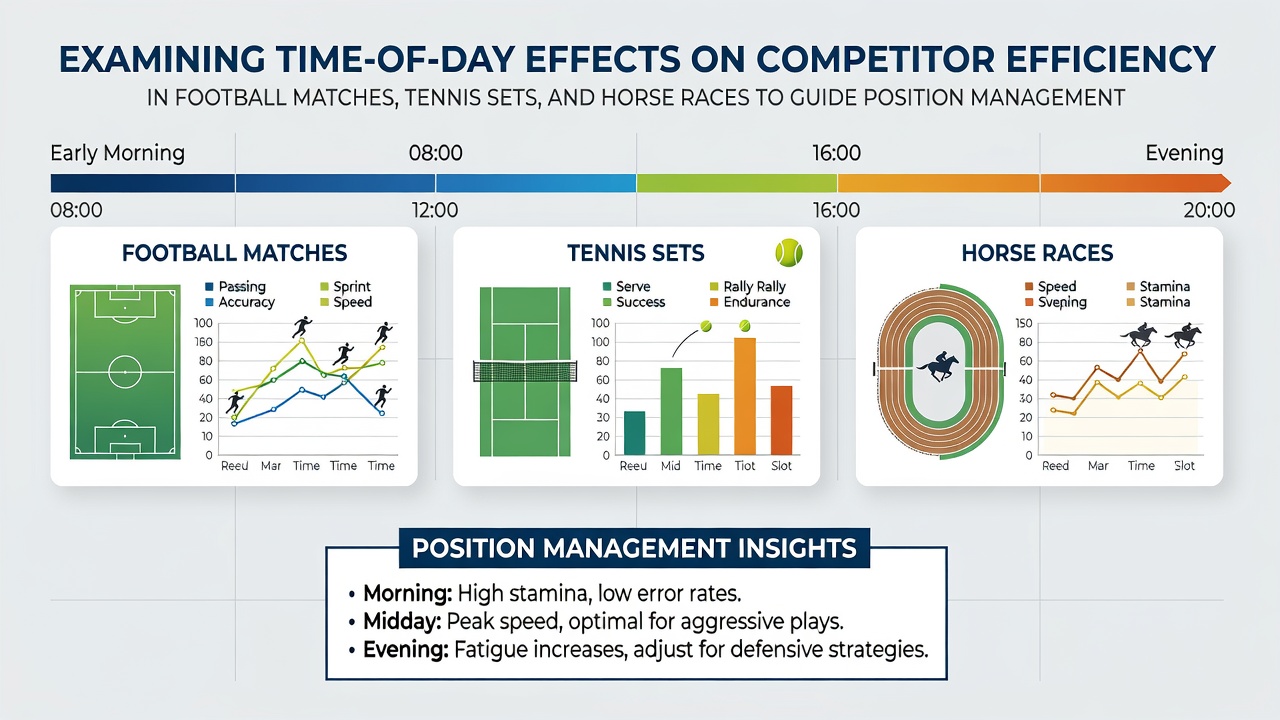
Competitor output in football matches, tennis sets, and horse races shows measurable shifts tied to the clock, with researchers documenting how circadian rhythms influence speed, accuracy, and endurance across these disciplines; observers tracking performance data note consistent trends that emerge when events unfold in morning, afternoon, or evening slots. Studies compiled through 2025 and into July 2026 reveal that athletes and animals exhibit peak physiological readiness during specific windows, which in turn affects how positions are managed in competitive settings where timing dictates strategic adjustments.
Football Match Timing and Player Metrics
Football fixtures scheduled at different hours produce distinct efficiency profiles, with data from league-wide analyses indicating higher sprint distances and pass completion rates during late afternoon kickoffs compared to evening slots; teams playing between 4pm and 6pm often record elevated work rates because core body temperatures align with natural alertness peaks, whereas night games under floodlights correlate with modest drops in high-intensity efforts. One longitudinal review covering European domestic leagues found that midfielders covered 7 percent more ground in 5pm starts than in 8pm fixtures, while defensive units maintained tighter positioning when matches avoided the post-dinner dip in cognitive function. Position managers reviewing these patterns adjust exposure levels accordingly, scaling involvement based on historical output rather than blanket assumptions about squad depth.
Tennis Set Dynamics Through the Day
Tennis tournaments spread matches across morning qualifying rounds and prime-time evening sessions, and performance logs show serve percentages and rally lengths fluctuate with the hour; players competing in sets that begin before noon demonstrate quicker first-serve speeds on average, yet error rates climb once matches extend past 9pm because reaction times slow under artificial lighting and accumulated fatigue. Research tracking Grand Slam and ATP events through mid-2026 highlights that three-set matches concluding after sunset feature longer average point durations, with baseline players maintaining consistency better than net rushers during those windows. Those monitoring player efficiency use these observations to calibrate entry points, noting that early-session specialists often outperform expectations when schedules favor daylight hours.
Horse Racing Efficiency by Race Time
Flat and jump racing cards list events from early afternoon through twilight, and speed figures compiled by track analysts indicate that horses running between 2pm and 4pm post superior sectional times compared with late-evening or dawn trials; physiological data collected from equine heart-rate monitors reveal optimal oxygen uptake during standard racing hours, while animals competing outside that band show reduced stride lengths and elevated recovery intervals. One dataset covering major British and Australian meetings documented a 4.2 percent improvement in winning times for races carded in the heart of the afternoon, with trainers adjusting preparation routines to align peak fitness windows accordingly. Position oversight in these environments therefore incorporates clock-based filters when evaluating contender suitability, especially for sprints where margins prove narrowest.
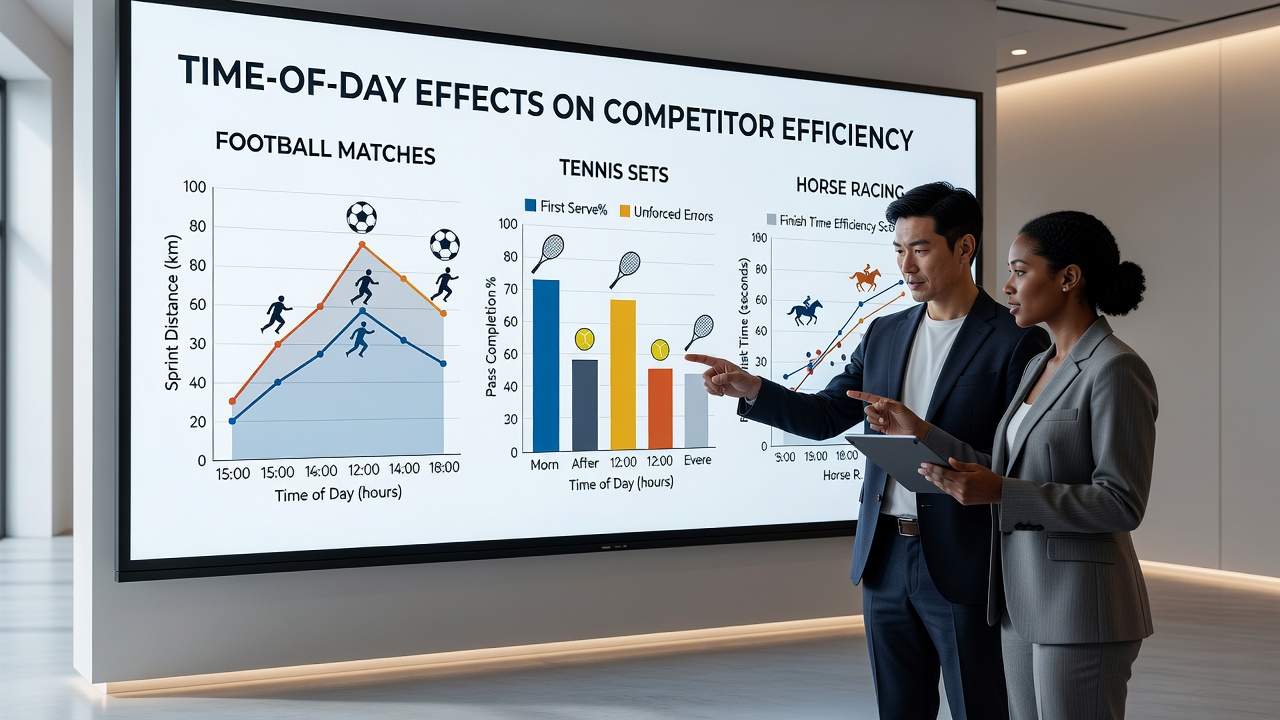
Cross-sport comparisons further illustrate how these diurnal effects interact with environmental variables such as temperature, humidity, and venue orientation; analysts combining datasets from multiple disciplines observe that the magnitude of time-of-day impact varies by surface and distance, yet the underlying rhythm remains detectable across thousands of recorded performances. External factors like travel schedules and recovery protocols can amplify or dampen the pattern, which is why detailed logging of start times alongside outcome metrics continues to refine predictive models used in competitive management.
Strategic Adjustments Informed by Temporal Data
Position management protocols now integrate time-stamped performance indices to determine allocation thresholds, with operators reviewing historical aggregates before confirming participation levels in specific fixtures; this approach draws on evidence from academic sources including circadian rhythm studies published through the National Center for Biotechnology Information and industry reports issued by the Australian Sports Commission, both of which underscore how synchronized scheduling yields measurable output gains. When football sides face back-to-back evening assignments, for instance, rotation matrices shift to protect key personnel during lower-efficiency periods, while tennis schedulers and racing syndicates apply similar filters when mapping campaign calendars through the 2026 season.
Yet the application remains data-driven rather than prescriptive, because individual responses to time shifts differ and require ongoing validation against fresh results; those compiling multi-year archives note that outliers exist, particularly among athletes or horses with atypical training histories, which is why layered monitoring systems combine clock variables with recent form indicators before finalizing decisions. The cumulative record through July 2026 continues to support the value of treating time of day as one coordinate among several when mapping competitive landscapes.
Conclusion
Time-of-day effects on competitor efficiency supply a quantifiable layer for position management across football, tennis, and horse racing, with aggregated statistics confirming repeatable patterns in output metrics tied to circadian alignment; ongoing collection of performance data supports continued refinement of these models as schedules evolve adn measurement tools improve, allowing stakeholders to incorporate temporal variables into established evaluation frameworks without displacing other critical inputs.